
RTJ — Ring Type Joints
Metal rings machined to close dimensional and surface-finish tolerances to provide metal-to-metal sealing in dedicated grooves.
Talk to our team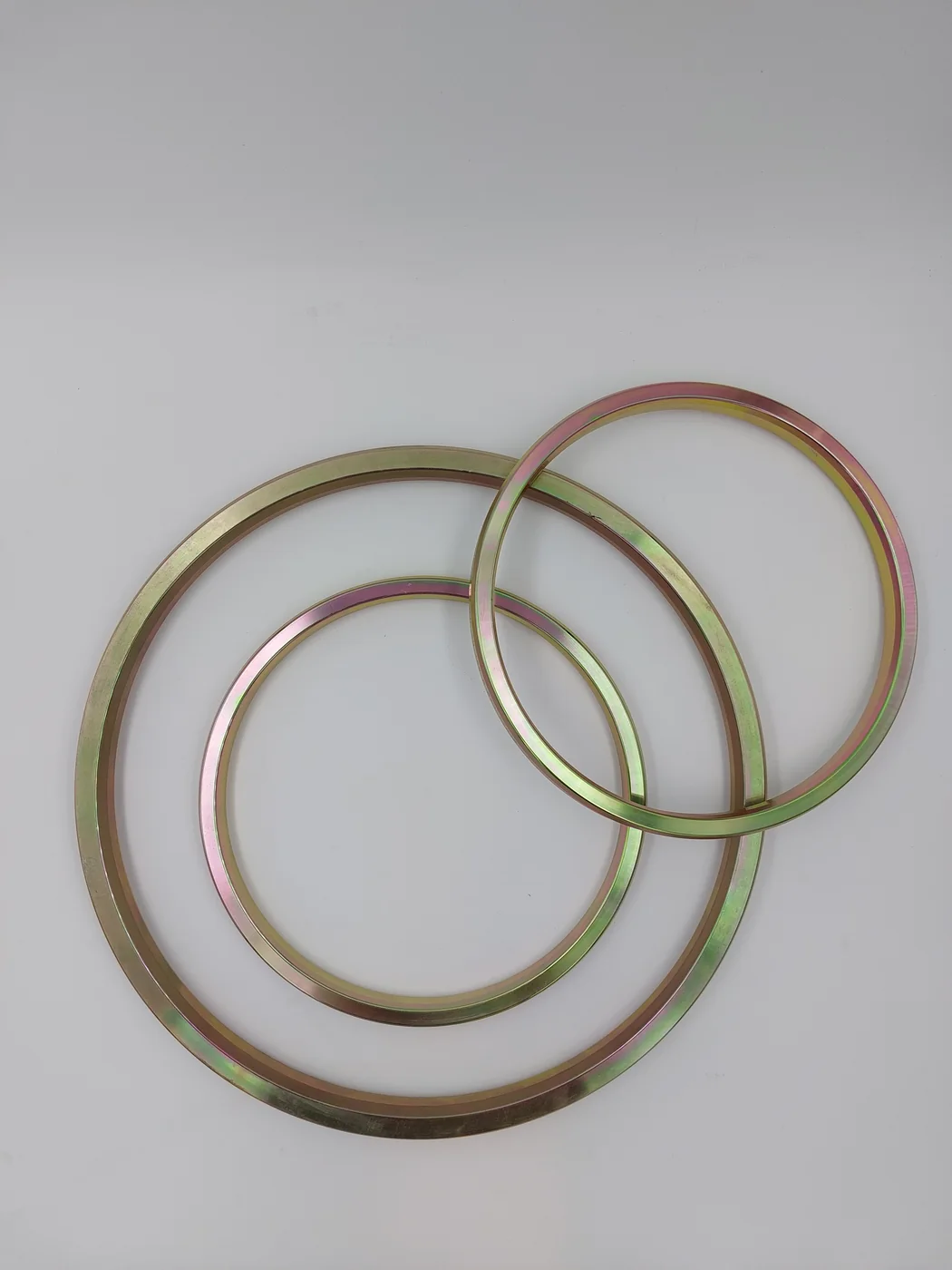
A technology for severe service
Ring Type Joints are widely used in petrochemical, oil and gas, high-pressure equipment and assemblies with RTJ grooved flanges.
The ring deforms locally against the groove to create the seal. Performance therefore depends heavily on:
- the correct profile;
- the ring material grade;
- dimensions;
- surface finish of the ring and groove;
- tightening;
- flange integrity.
Standards
The current range includes:
- API 6A for many oilfield applications;
- ASME B16.20;
- versions corresponding to ASME, BS and DIN flanges, depending on the profile.
The standard and ring number must be clearly stated on every enquiry where available.
Principal profiles
R Oval
Traditional oval-section profile used in matching grooves.
R Octagonal
Octagonal profile with different contact geometry. Never consider R Oval and R Octagonal interchangeable without checking the groove and standard.
RX
Pressure-energised profile used in certain API flanges and classes.
BX
Profile for specific very-high-pressure flange systems to API requirements.
Associated special constructions
Depending on equipment design, EST can also supply or assess:
- transition rings;
- Weld Rings;
- Lens Rings;
- other machined metal rings.
These solutions are covered in more detail on the Special metal gaskets page.
Materials
Available materials include:
- soft iron;
- low-carbon steel;
- F5;
- 304 / 316 / 347 / 410 stainless steel;
- Grade 2 titanium;
- alloys 600 / 625 / 800 / 825;
- Hastelloy;
- C276;
- SMO 254;
- Zeron 100;
- Super Duplex.
Material selection depends on flange material, fluid, temperature, required hardness and applicable standards.
Certification and traceability
Certain alloys can be supplied with traceability and specific certification, particularly where NACE requirements apply.
Material certificates and specific requirements are available on request and confirmed case by case at quotation stage.
Let us review your requirements
To avoid profile errors, please provide the RTJ number, standard, flange class, preferred material and quantity wherever possible. A photograph or drawing of the groove can also be useful.